







Choose Your Province/State of Service

In order to serve you better, please select your Enbridge Gas location services.

Choose Your Province/State of Service

We noticed you are visiting from Utah, would you like to visit our Utah site?

Continue to Utah's site

Or please select your province/state of your choice so we can display the correct content for your location?

Choose Your Province/State of Service

In order to serve you better, please select your Enbridge Gas location services.

is currently
selected

Go to this state's site Stay on this state's site

Choose Your Province/State of Service

We noticed you are visiting from Utah, would you like to visit our Utah site?

is currently
selected

Sewer blocked? Protect your home with a sewer safety inspection

Blocked sewer lines and flooded basements can be stressful—learn how to resolve clogged sewers quickly and safely.

Blockages in pipes inside your home can typically be addressed through normal plumbing services. If you are experiencing a blocked or backed-up sewer line, contact a licensed plumber for assistance.

Before using mechanical equipment to clear an exterior sewer or septic line, it is important to consider the possibility of underground utility conflicts, including a cross bore.

Common signs of a blocked sewer include:

  • Slow-draining sinks, tubs or showers
  • Gurgling sounds from drains or toilets
  • Sewage backing up into drains or fixtures
  • Unpleasant sewer odors inside or outside your home
  • Water backing up through a basement drain
  • Water or sewage pooling in your yard

If you suspect a blocked sewer line, contact a licensed plumber (USA) or Ontario One Call (Canada) for assistance before attempting any excavation or clearing work.
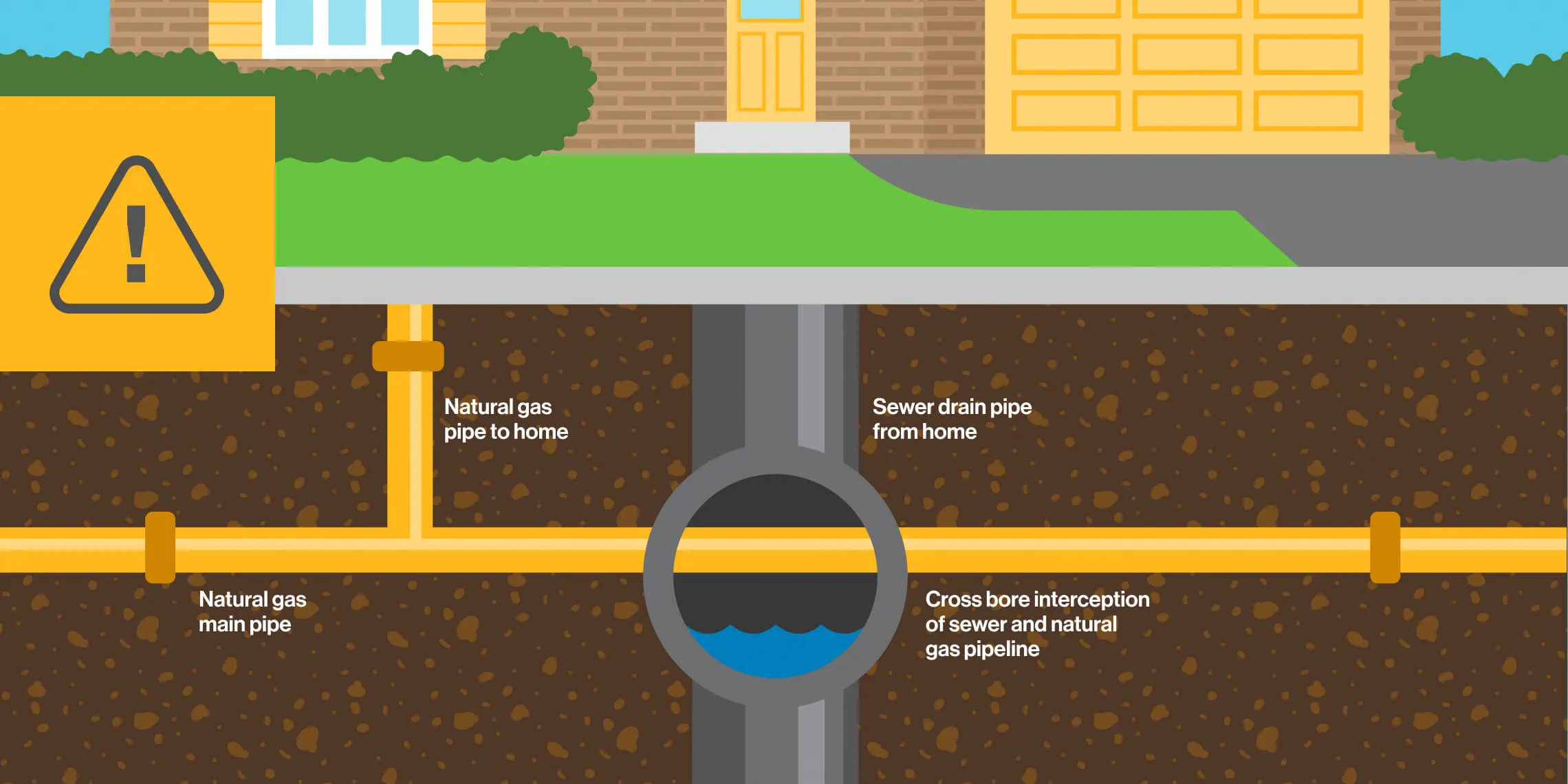
What is a cross bore?

A cross bore occurs when a natural gas line unintentionally passes through a sewer or septic line. Cross bores are rare, but they can create a serious safety risk if sewer-cleaning equipment damages the gas line.
Important: Do not use mechanical equipment to clear an exterior sewer or septic line if there is a suspected utility conflict.

How does a cross bore occur?

Some natural gas lines are installed using trenchless construction methods to minimize disruption to yards, sidewalks and streets. Because older sewer and septic lines can sometimes be difficult to locate, a natural gas line may unintentionally pass through an existing pipe. Modern locating technology and inspection practices help reduce the risk of cross bores occurring.

How does a cross bore occur?

Cross bores are rare, but they do exist.

Through the process of trenchless drilling, costly damage to yards, sidewalks and streets is minimized. However, sewer lines are traditionally difficult to locate, unlike other types of underground utilities. Since they're made of non-metallic materials and are installed without any type of aid that allows them to be located above ground, natural gas lines may unintentionally be installed through existing infrastructure. Thankfully, due to more recent locate technology and significant investment, we’re now able to prevent cross bores from occurring.

Smell gas? Act fast!

Natural gas smells like rotten eggs or sulphur, so you know right away if there’s a leak. Natural gas is not toxic, but it is highly flammable. If you smell gas or think you have a gas leak, leave the area immediately and call Enbridge Gas Emergency number or 911 from a safe distance (like a neighbour’s home).

Signs that a natural gas line has been damaged during the clearing of a sewer service line:

Rotten egg

Smell of rotten eggs or sulphur

Bubbles

Bubbling water

Snake near an ear

Hissing or whistling sounds

Dirt blowing in the wind

Blowing dirt near a gas line


Call before you clear logo

If you're experiencing sewer line issues, request a free inspection

Call Ontario One Call at 1-800-400-2255 before you or your plumber attempt to clear a blocked sewer pipe.

Contact Ontario One Call

Frequently asked questions

When we install natural gas pipelines, we’re required to identify and locate private sewer lines that may potentially intersect with the new natural gas pipeline, to ensure we install it safely. This inspection may require access to the sewer lines from inside homes, even if your home is not connected to natural gas.

If we’re in your neighbourhood, we may need access to your basement to complete the inspection. We’ll provide you with notification—all our service technicians can be identified by an Enbridge Gas licensed contractor photo identification card.

Homeowners or licensed plumbers run the risk of damaging a natural gas line when using motorized or water-jetting equipment to clear a blocked sewer line. Once damaged, the gas line could leak or rupture, causing the release of natural gas. Natural gas is not toxic, but it is highly flammable.

A cross bore may remain undetected until work is performed on a sewer or septic line. This is why care should be taken when investigating or clearing an exterior blockage.
Possible signs of a sewer blockage include:

  • A backed-up basement drain
  • Clogged or backed-up toilets, bathtubs or sinks
  • A blocked sewer line causing water or sewage to collect in the yard

A licensed plumber can assess the blockage and determine the appropriate next steps.

When you request a sewer safety inspection, the appropriate service provider in your area will be notified. A technician will visit your property to determine whether a clogged sewer line is present and assess the potential for a cross bore. If there is no risk of a cross bore, sewer-clearing activities can proceed. If a potential cross bore is identified, the utility will be notified and additional safety measures will be taken before any clearing work begins.

Yes. Before starting any digging project, you or your contractor must contact Ontario One Call (Canada) or 811 (United States) to request utility locates. Whether you're landscaping, building a fence, planting a tree or garden, installing a deck, or completing another project that disturbs the ground, utility lines must be located and marked before digging begins.

Locators from natural gas, water, sewer, electric and telecommunications companies will visit your home and paint or put flags to mark underground lines. Digging without a locate can damage lines. This poses a safety hazard, can cause loss of service and is also subject to fines. Never assume your contractor has taken care of it. Work in collaboration with them, and ask for verification that they’ve requested a locate before they start digging. Marking the location of buried facilities is a free service.