







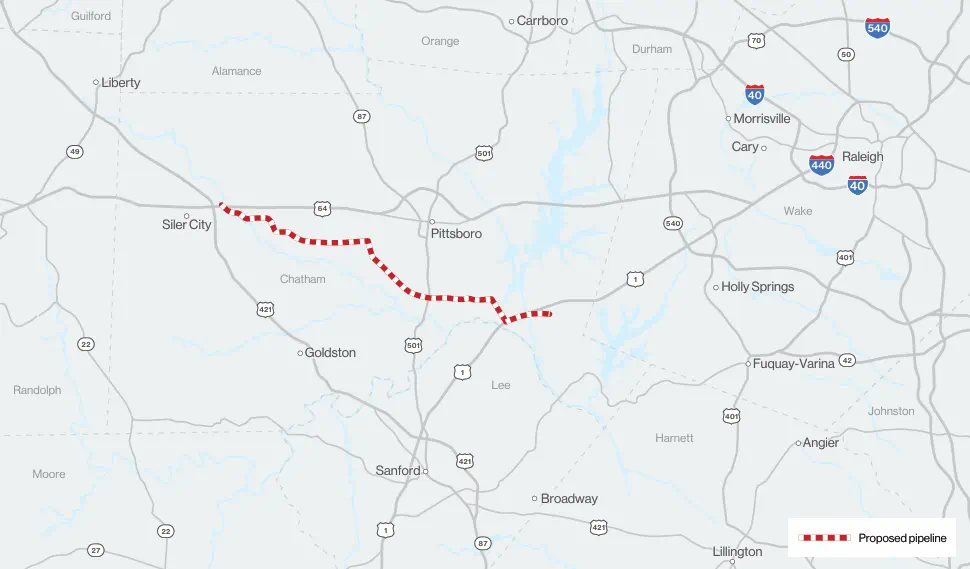
This project is a proposed natural gas pipeline, approximately 28-miles long and 12 inches in diameter, that would connect existing natural gas infrastructure in Siler City and the Moncure area. It would connect portions of Enbridge Gas North Carolina’s system currently operating within Chatham County. The project is intended to increase system capacity and help deliver natural gas to homes, businesses and communities in the area.
Why the project is needed:
-

Maintain reliable service for existing customers
-
Improve regional system reliability and flexibility
-
Expand capacity to support future residential and community needs
The project is part of long-term planning efforts to support future energy needs in the area.
Addressing common questions
Question:
Is this pipeline being built to power a data center?
No. The proposed 12-inch pipeline is not intended or capable of supplying a data center. A pipeline serving a data center would need to be at least twice the size of the proposed pipeline, along with major upgrades to existing infrastructure and the broader natural gas system.
Question:
Is there a need for another natural gas pipeline?
Yes. Chatham and Lee counties are experiencing strong population and economic growth. As more homes, businesses and manufacturers connect to the natural gas system, demand continues to rise. The project will add needed capacity to support growth while helping maintain reliable service for existing customers.
Question:
Can pipelines be operated safely in communities?
Yes. Safety is a priority throughout construction and operation of the pipeline. Multiple layers of oversight, monitoring and maintenance help ensure work is completed safely, responsibly and in compliance with regulatory requirements.
Question:
Does farmland matter during pipeline construction?
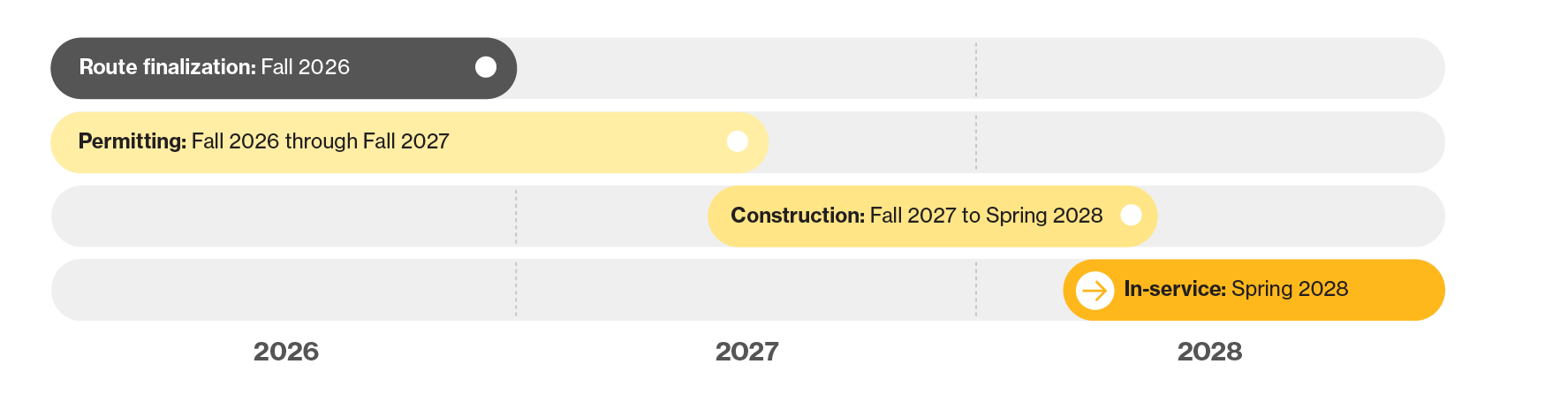
Project timeline
How are potential pipeline routes developed?
-
Initial study area
-
Environmental and cultural resource review
-
Engineering and land use evaluation
-
Refined potential route
-
Initial study area
-
Environmental and cultural resource review
-
Engineering and land use evaluation
-
Refined potential route
Understanding the process
As part of project planning, Enbridge Gas may conduct surveys to gather information about potential routes, environmental features, engineering considerations and existing land uses. Survey activities help inform project planning and route evaluation.
Survey activities may include environmental, engineering, cultural resource or geotechnical studies. They:
- Are temporary in nature
- Are used to gather information for project planning
- Help evaluate potential routes and constraints
- Do not provide permanent rights to the property
When the route is selected, Enbridge Gas will work directly with affected landowners to negotiate easement agreements.
An easement is a legal agreement that allows a pipeline to be constructed, operated and maintained on a defined portion of a property while ownership remains with the landowner. It:
- Defines the location and terms of access
- Provides compensation to the landowner
- Establishes rights and responsibilities
- Does not transfer ownership of the property
As the project moves forward:
- Landowners are contacted directly
- Questions can be discussed with the project representatives
- Easement terms are negotiated
- Compensation is offered when agreements are reached
Most easements are acquired through negotiated agreements with landowners.
Enbridge Gas understands that decisions about property can feel significant and personal. Landowners are encouraged to:
- Ask questions
- Review information
- Understand the project
- Discuss easement terms
- Make informed decisions
Enbridge Gas North Carolina has selected a route that balances multiple factors, considerations and stakeholder feedback to reduce impacts on the environment and community.
 If you are a landowner in the survey area, the best point of contact for the project is the land agent who reached out to you.
 You've asked. We're listening.
Explore the topics below to learn how we’re working on addressing your concerns.
 Aerial patrols: Regular aerial inspections of pipeline corridors.
 Leak surveys: Routine leak detection and response activities.
 24/7 Control Center monitoring: Continuous oversight of pipeline operations.
 Ground patrols: Regular field inspections of pipeline facilities.
 Local Operations and Maintenance teams: Local employees live and work in the communities they serve and are responsible for operating and maintaining the pipeline system.
Your input matters
Your feedback helps us understand what’s important to you and your community.
If you are a landowner and have received a survey notification letter, please continue to contact Enbridge Gas' land agent team directly with your questions. If not, please use the contact form below.
For more information:
- Who we are
- Pipeline Safety
- Frequently asked questions - English
- Preguntas Frecuentes - En español
(Si los propietarios de terrenos han recibido una carta de notificación de levantamiento topográfico, deben seguir comunicándose con el equipo de agentes de tierras de Enbridge Gas para hacer sus preguntas, en lugar de utilizar el formulario de contacto. Si tiene preguntas generales sobre el proyecto, puede llamar al 919‑819‑1325.) - Open House Information Boards
