







Choose Your Province/State of Service

In order to serve you better, please select your Enbridge Gas location services.

Choose Your Province/State of Service

We noticed you are visiting from Utah, would you like to visit our Utah site?

Continue to Utah's site

Or please select your province/state of your choice so we can display the correct content for your location?

Choose Your Province/State of Service

In order to serve you better, please select your Enbridge Gas location services.

is currently
selected

Go to this state's site Stay on this state's site

Choose Your Province/State of Service

We noticed you are visiting from Utah, would you like to visit our Utah site?

is currently
selected

Call Before You Dig — It’s the Law

Thousands of damages to underground natural gas infrastructure are reported each year—most caused by unsafe excavation practices. Whether it’s a small landscaping project or a large construction job, striking an underground utility can delay your work and put your crew, company, and community at serious risk. It can also result in costly repairs, fines, or legal consequences.

Before you dig, always request a utility locate—it’s the law. Respect the markings and excavate safely.

Before you dig, request a locate

In Ohio, Utah, Wyoming, and Idaho, requests must be made at least 48 hours before the project begins, excluding the day of the request. In North Carolina, requests must be made at least 72 hours before the project begins, excluding the day of the request. In Ontario, requests must be made at least five business days before the project begins. Utility locates must be completed and marked before any work begins. It's the law.

North Carolina: Call NC811 by dialing 811 or visit nc811.org
Ohio: Call 800-362-2764 or 8-1-1 or visit Ohio811 e-dig

Ontario: Visit Ontario One Call
Utah, Wyoming and Idaho: Call 811 or visit call811.com

Damaging a natural gas line has serious consequences

Head

Seriously hurting yourself or coworkers.

Dollar sign

Incurring expensive legal and repair costs, serious penalties and charges.

A circular design featuring a cross symbol, prominently displayed on a white backdrop.

Losing productivity by bringing your project to a stop.

A document with a dollar sign, surrounded by a grey circle.

Jeopardizing future contracts and your reputation.

Safety

Interrupting natural gas service to the neighborhood.

Contractor requirements

Government regulators require excavators to follow established safety standards when working near natural gas infrastructure. Enbridge Gas requirements outline how to safely operate near our service lines and are used as a reference in cases where damage occurs due to unsafe excavation practices.

Follow these steps to dig safely

One

Submit your locate request

Before you dig, always request a utility locate—it’s the law.

Two

Wait for buried lines to be marked

Locate representatives from each underground infrastructure owner will come out to mark your job site with locate flags or temporary paint.

Three

Respect the marks and dig safely

Once locates have been completed, follow the instructions and proper excavation practices to ensure a safe and smooth project.


Know the color codes

Locates show the direction and approximate location of the natural gas line, but do not show their depth. A natural gas line could lie just a few inches below the surface.

A black circle with a yellow indicator circle in the middle.

Yellow: Natural gas, oil, steam

A black circle with a green indicator circle in the middle.

Green: Sewer, storm

A black circle with a red indicator circle in the middle.

Red: Electric

A black circle with an orange indicator circle in the middle.

Orange: Communication

A black circle with a blue indicator circle in the middle.

Blue: Water

A black circle with a pink indicator circle in the middle.

Purple: Irrigation, slurry

A black circle with a pink indicator circle in the middle.

Pink: Temporary survey markings

A black circle with a white indicator circle in the middle.

White: Proposed excavation

Tips for safe excavation around natural gas lines

Number 1

Wait for buried lines to be marked
Allow the required time for locate representatives to mark your job site with locate flags or temporary paint.

Number 2

Keep a safety clearance on either side of your locate marks. This is known as the tolerance zone:
North Carolina, Utah, Wyoming, and Idaho: 24 inches on either side, Ontario: One metre on either side and Ohio: 18 inches on either side.
You must use safe digging practices within the tolerance zone.

Number 3

Always dig around a natural gas line by hand first
If you’re digging in the tolerance zone, you must use a shovel or hydrovac to carefully expose the natural gas line before digging with heavy equipment. Do not assume the depth of the line—take care with shallow shovel scoops.

Number 4

Support the natural gas line
Install a temporary steel or wood support system to prevent the natural gas line from bending or sagging during excavation.

Number 5

Shore up appropriately
For deep trenches, place boards or other bracing against the excavation walls to prevent the trench from collapsing and damaging lines.

What to do if you damage a natural gas line or smell gas

A circular design featuring a cross symbol, prominently displayed on a white backdrop.

Stop work and shut off all tools, machinery or equipment.

A white circle containing a person.

Clear everyone from the area.

A gold circle featuring a phone that is ringing.

Call 911 and Enbridge Gas emergency line immediately.

Exclamation sign

Do not attempt to control or stop the gas from escaping.

A contractor in a safety vest and hardhat operating a small excavator in a backyard. 2

Become a certified expert to add value to your company

Sign up for Ontario One Call’s online Professional Locate Administrator Course (PLAC). Through nine interactive modules, you’ll learn how to effectively manage locates and keep your crew and your community safe.

Register now
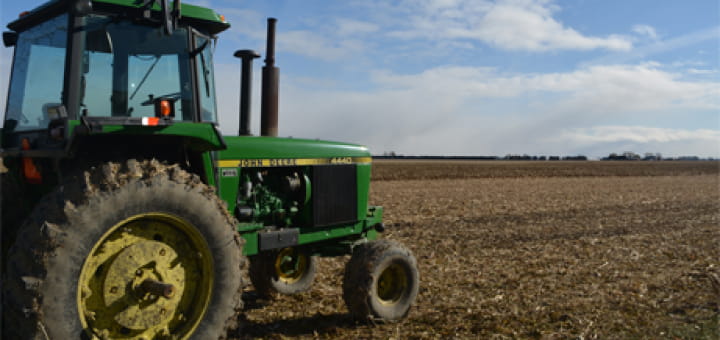
A tractor on a freshly harvested field.

Planning work near vital pipelines?

When you request a locate from Ontario One Call, the locate service provider may identify that a vital natural gas pipeline is within 30 metres of the proposed work area. Legally, you can’t begin work until a you obtain a clearance.

More information 

Frequently asked questions

Locates are color-coded ground markings identifying the approximate position of underground lines and cables on a proposed job site. They’re made using temporary paint or flags.

Any time you are digging on your property, a locate is required. Even small projects such as adding a garden or planting a tree require a locate. It’s free and it’s the law.

To get a free locate, call 811 or visit nc811.org for North Carolina, call 800-362-2764 or 8-1-1 or visit Ohio811 e-dig for Ohio, contact Ontario One Call for Ontario and call 811 or visit call811.com for Utah, Wyoming and Idaho.

The utilities that need to be marked include but are not limited to: electric, water, sewage and Enbridge Gas, as well as telecommunication companies.

Utility locates are a free service. There’s no cost to you. Any privately owned infrastructure, such as a gas line that runs from your meter to your pool heater or barbecue, will not be covered under the request. You’ll need to hire a private locate company to mark these lines and there is a charge for this service.

A utility locate request must be submitted before the planned start date of your project. In Ohio, Utah, Wyoming, and Idaho, requests must be made at least 48 hours before the project begins, excluding the day of the request. In North Carolina, requests must be made at least 72 hours before the project begins, excluding the day of the request. In Ontario, requests must be made at least five business days before the project begins. Utility locates must be completed and marked before any work begins. It's the law.

You’ll need to provide Ontario One Call for Ontario or 811 for US with your name and address, the date work is expected to begin, the type of project being completed, how you plan to dig (shovel, excavator, etc.) and how deep you plan to dig.

Any privately owned infrastructure, such as a gas line that runs from your meter to your pool heater or barbecue, will not be covered under your request. You’ll need to hire a private locate company to mark these lines and there is a charge for this service.

A qualified utility representative will visit your property and mark the location of all underground cables and pipes. They do this by painting or inserting flags in the ground along the path of the pipe or cable.

You can check the status of your request on the web portal. Owners of buried infrastructure will mark the status of their lines as either “clear” or “complete.” A clear status means there is no risk and that your proposed digging area is safe. A complete status means the locate has been marked on your property. All utilities must be marked as either clear or complete to proceed.

The actual location of the buried line may be within 18 inches (Ohio), 24 inches (North Carolina, Utah, Wyoming, and Idaho), or one metre (Ontario) on either side of the paint or locate flags placed on your property. This is referred to as the tolerance zone. When digging in the tolerance zone, you must first use hand tools (such as a shovel or spade) to carefully expose any buried utilities before using mechanized equipment.

An Enbridge Gas locate are valid for as below:
North Carolina: Locates are valid for 28 days from the Work Date listed on the ticket.
Ohio: Locates do not expire as long as the markings remain clearly visible.
Ontario: Locates are valid for 60 days from the date they are completed.
Utah, Wyoming and Idaho: Locates are valid for 21 days from the date they are completed.
If your locate has expired or the markings are no longer visible, you must request a new locate before continuing your project.

Moving or removing locates makes them invalid and you’ll be liable for any damage that occurs on your property. You must contact OntarioOneCall.ca/811 to arrange a new locate before you or your contractor can start digging.

If you smell rotten eggs, hear an unusual hissing sound, or see dust or leaves blowing in a localized area, you may have damaged a line. You may also see a physical puncture or gouge on the line.